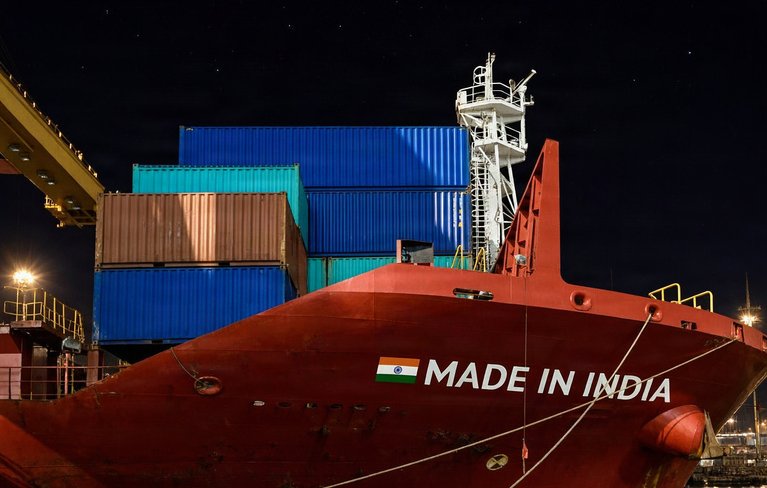
India and the European Union (EU) could soon be signing the "mother of all deals" — a free trade agreement (FTA) intended to benefit two billion people on both sides collectively. Officials from the two parties anticipate the signing to take place mid-December, and the deal to kick off in the first quarter of 2027. The agreement is a result of nearly two decades of prolonged negotiations, which concluded early this year at the 16th India-EU summit in New Delhi.
The deal is currently going through a rarely applied "fast-track procedure" in the EU parliament, as confirmed in a recent European Commission press release. "Our focus has been clear from the start: to ensure that businesses and citizens feel the tangible benefits of this landmark FTA as quickly as possible," said Maroš Šefčovič, Commissioner for Trade and Economic Security, Interinstitutional Relations and Transparency. "Timing matters, which is why we are submitting our proposals to the Council for signature and conclusion in record time," he added.
The hastened approval process came at a time of "rising geopolitical tensions and global economic challenges," according to a press release from the government of Slovenia, an EU member. Hence, the deal is a pathway for the EU to strengthen its economic security by diversifying supply. India, with a population of more than 1.45 billion people and an annual GDP of about USD 3.7 trillion, is a market that could provide "a significant competitive advantage" to the EU.
Once in effect, the FTA will eliminate or reduce tariffs on 96 per cent of EU goods and potentially double the exports to India. Additionally, the tariff reductions are expected to save the EU around USD 4.4 billion per year in duties on merchandise sales. Cars, machinery, and agri-foods are some of the categories that will receive maximum boost — up to a 90 per cent slash. For India, the tariffs will be lowered or eliminated on almost all of the items it sends to the EU. On top, the Europeans have offered to open specific service fields to Indian providers; these include information technology, accounting, engineering, and more.
"We are aiming for a win-win outcome," commented Šefčovič, after a meeting with Piyush Goyal — India's trade minister — early this year. He also said that the pact will bring together two of the world's largest economies, impacting "around a quarter of global GDP."
This monumental trade expansion pact was underpinned by the existing diplomatic and trade relations between the two economies. The European bloc as a whole is India's largest trading partner, consuming a share of 11.5 per cent of India's total trade. They buy and sell more than USD 200 billion (€180 billion) worth of goods and services annually between each other. Yet, the EU believes its exports to the subcontinent are "relatively low compared to their exports elsewhere."
Currently, India is the EU's ninth biggest trading partner; the deal could push the subcontinent to a higher spot. "It will reduce tariffs and administrative burdens, making trading easier, cheaper and faster. This will help the EU companies and farmers export more," said the European Commission press release.
Amidst the rise of a multipolar global order, the EU isn't the only market India is striving to expand its trade relations with. In the past 15 months, the country has negotiated or signed agreements with major economies like Mexico, New Zealand, the MERCOSUR bloc, Chile, the Southern African Customs Union (SACU), the United Kingdom (UK), Maldives, Oman, the United States of America (USA), and Canada.
The India-New Zealand FTA has even already entered into force, allowing the Indian exporters duty-free access to 100 per cent of New Zealand's tariff lines. Under the agreement, the island country has made commitments to invest around USD 20 billion in India. The two countries are also aiming to double their bilateral trade by 2030. Similarly, India has concluded a historic Comprehensive Economic Partnership Agreement (CEPA) with Canada, with the latter recently sending a delegation of 300 people — its largest ever sent to India in more than 30 years.
The trend has shed light on India's ambitious plans of further opening its economy, diversifying supply chain, and expanding export of goods and services. Next in line for India would be to get its FTA with the EU up and running, which is closer than ever to being manifested into reality.