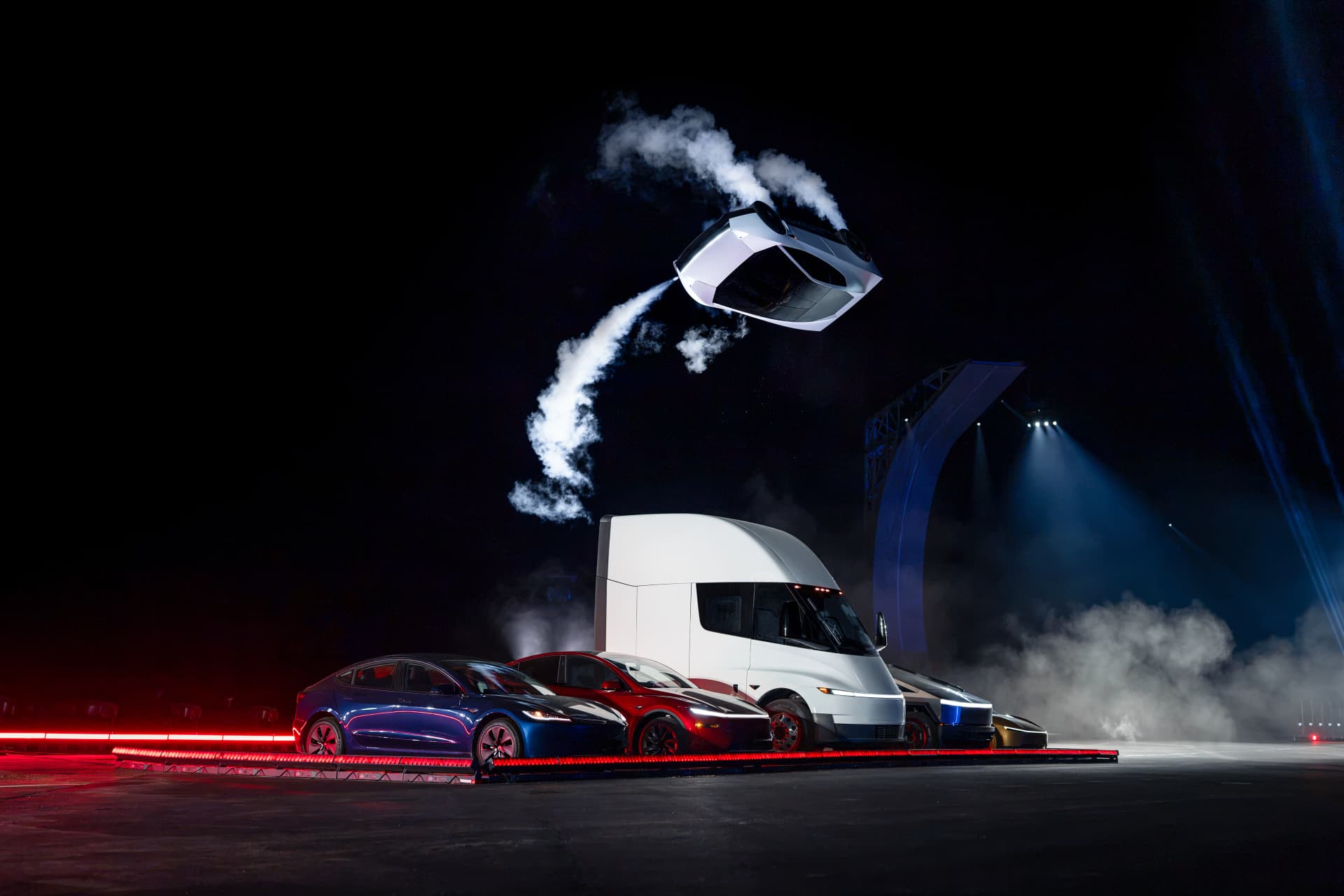
For years, Tesla has been described as an electric car manufacturer. But that description is becoming increasingly inadequate.
Under the leadership of Elon Musk, the American company is transforming itself into something far more ambitious: a technology powerhouse spanning artificial intelligence, robotics, autonomous transportation and energy.
While traditional carmakers compete over vehicle sales and market share, Tesla is pursuing an altogether different prize — reshaping how humanity works, travels and lives.
And although the challenges are enormous, there are compelling reasons to be optimistic.
Optimus: The Robot That Could Change Everything
Perhaps Tesla's most extraordinary ambition is Optimus, its humanoid robot designed to perform everyday physical tasks.
Imagine a future in which robots undertake dangerous factory work, assist elderly people, clean homes and perform repetitive jobs, freeing humans to concentrate on more meaningful activities.
This is precisely the future Musk wants to create.
Speaking during Tesla's second-quarter 2026 earnings call, Musk declared:
"I think Optimus will be the biggest product ever."
He also acknowledged that creating a reliable, genuinely autonomous humanoid robot is extraordinarily difficult, with major engineering and manufacturing obstacles remaining.
Yet Tesla possesses an unusual advantage. Its experience developing batteries, electric motors, computer vision and artificial intelligence for vehicles provides technologies that can also be applied to robotics.
If Optimus can eventually be manufactured affordably and at scale, its potential market could extend far beyond the automotive industry.
The Future of Cars: From Driving to Being Driven
Tesla's automotive ambitions are equally revolutionary.
Its Model 3 and Model Y helped establish electric vehicles as desirable mainstream products. Now the company is increasingly focused on removing the need for a human driver altogether.
The Cybercab, Tesla's purpose-built autonomous taxi, represents this vision. Designed without conventional driving controls, it could eventually offer affordable transportation without requiring individual car ownership.
Musk believes artificial intelligence and Tesla's extensive vehicle data could transform road safety.
At Tesla's We, Robot presentation in October 2024, he predicted that autonomous driving would become:
"10-, 20-, 30-times safer than a human."
That remains an ambitious prediction rather than a demonstrated industry-wide outcome. Regulatory approval, reliability and public confidence will determine how quickly autonomous transport becomes commonplace.
Meanwhile, Tesla continues developing exciting conventional vehicles. Its next-generation Roadster represents extraordinary performance ambitions, with Musk previously discussing the possibility of incorporating technology developed alongside SpaceX.
Tesla Semi: Reinventing the Trucking Industry
The Tesla Semi could prove equally significant.
Heavy goods vehicles are essential to the global economy, but conventional diesel trucks contribute substantially to emissions and operating costs.
Tesla's electric Semi aims to change that through electric propulsion, advanced technology and potentially lower lifetime energy and maintenance costs.
Tesla has delivered initial Semi vehicles and is developing dedicated manufacturing capacity in Nevada. The opportunity is considerable, particularly among major logistics operators seeking to electrify their fleets.
Success will depend on competitive pricing, charging infrastructure, payload efficiency and production at scale.
But should Tesla overcome those challenges, its influence could extend from family driveways to the world's busiest freight corridors.
The Elon Musk Factor: Why Leadership Matters
Technology alone does not explain Tesla's appeal. Much of the company's identity is inseparable from its chief executive.
Musk has repeatedly demonstrated a willingness to pursue ideas dismissed by conventional thinking, from reusable rockets at SpaceX to the mass adoption of electric vehicles.
His approach combines engineering ambition, extraordinary risk-taking and a refusal to accept existing technological limitations.
Speaking about Tesla's potential in January 2025, Musk said:
"I see a path. I'm not saying it's an easy path."
That determination is arguably one of Tesla's greatest strengths.
Of course, Musk is not without controversy. His ambitious deadlines have sometimes slipped, and his political activities and numerous business commitments have attracted criticism. Tesla also faces formidable competition, significant capital requirements and uncertainty over when its newest technologies will become profitable.
Nevertheless, few business leaders have demonstrated a comparable appetite for transforming multiple industries simultaneously.
For those optimistic about Tesla, the attraction is not simply Musk's promises. It is his record of helping turn seemingly improbable technologies into commercially significant products.
A Company Betting on Tomorrow
Tesla's existing automotive business remains substantial even as the company invests in future technologies.
Its ultimate success will depend on execution rather than ambition alone. Robots must become useful and affordable, autonomous vehicles must prove safe, and electric trucks must compete commercially.
Yet the potential rewards are enormous.
Tesla is no longer simply asking how to build a better car. It is asking how artificial intelligence and engineering might transform everyday life.
That is an extraordinary ambition. And with Elon Musk continuing to push its boundaries, there is good reason to believe Tesla's most remarkable chapter may still lie ahead.